
Concrete driveways with clean edges and tight joints.
A driveway takes tires, salt and freeze-thaw every year. It lasts when the base is right, the slope sends water away and the joints are placed with a plan.
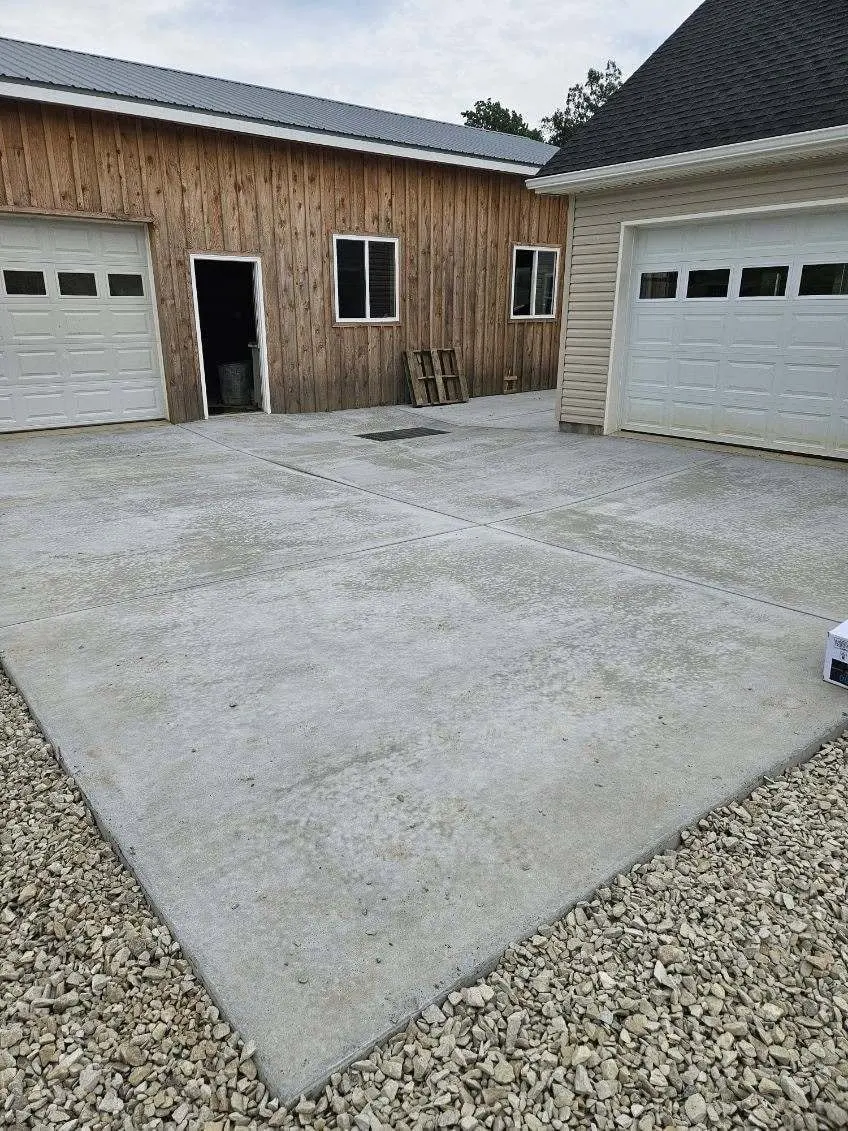
What is included
Done in a set order.
01Solid base
Compacted stone under the slab so it does not settle or heave.
02Slope for drainage
Surface pitched so water runs off, not toward the house or garage.
03Planned joints
Joints placed to limit random cracking and keep panels even.
Driveways in western Pennsylvania live through hard winters and a lot of salt. The concrete itself matters, but so does what is under it and where the water goes after it rains or the snow melts.
We pour new driveways and aprons at garages and outbuildings. If you are replacing an old drive, tell us what is there now and what has gone wrong with it. That shapes how we prep.
How a job goes
- Look at the siteCheck the grade, drainage and where the driveway meets the road and the garage.
- Set the baseStone is compacted to the right depth and shape.
- Form it upForms set the edges, the width and the slope.
- Pour and finishConcrete is screeded and finished, with a texture that gives tires and shoes grip.
- Joint and cureJoints are cut, edges are tooled and the slab is left to cure.
Questions
Common questions about driveways.
When can I drive on a new driveway?
Walking on it is fine after a day or two. Keep cars off for about a week, and keep heavy trucks off longer. We will give you a date based on the weather.
Will you tear out my old driveway?
Removal and replacement are part of the conversation. Tell us what is there now and we will include what it takes in the estimate.
What finish do you use?
Most driveways get a broom finish for traction. If you want something different, ask when we talk about your job.
Related